
A fortnight ago, we took a winter walk in Sidmouth Cemetery with Liz Dicker and Mick Street of the Cherishing Sidmouth Cemeteries project.
One of the highlights are the magnificent wild hellebores which greet us with their glorious green winter flowers along the Temple Street driveway – and there are others in the Cemetery and beyond, both in gardens and in the wild.
Here’s a really fine example, captured by Mick, in his piece in the latest Herald on nature’s gifts to gardeners in the dismal months after Christmas:
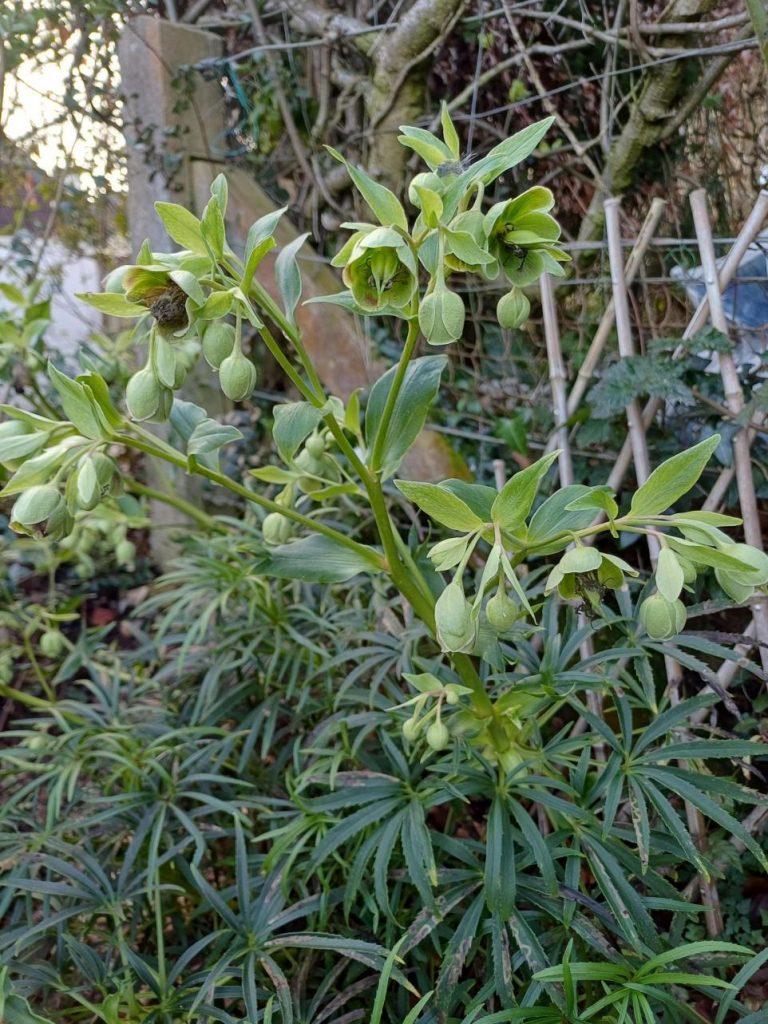
This is indeed one of the wild hellebore species – this being the Helleborus foetidus.
As Mick says in his piece, highlighting their importance at this time of year to emerging insects:
There are only two Hellebore species native to Britain. H. foetidus, the Stinking Hellebore is a tall evergreen with clusters of small, pale green flowers. It is widely grown in gardens and can be found as a garden escape in wild places. It is also often used for hybridising. The other native is the Green Hellebore, H. viridis, a smaller plant with green flowers nearly the same colour as the leaves. Both these species are uncommon and only found wild in woodlands in the south of England.
Hellebores are ideal plants for growing in an open woodland situation or under the shade of shrubs and look especially good with their frequent companion, the snowdrop. Any Hellebore will provide our bumblebees with a welcome drink of nectar and also pollen for their developing offspring. Avoid double flowered forms though, as the extra ring of “petals” replace the nectaries and so doubles only have pollen. Hellebores are one of nature`s gifts to gardeners in the dismal months after Christmas when the weather can be wet or cold and spring seems a long way off.
…