
There have been some wonderful pieces published on these pages penned by members of the Cherishing Sidmouth Cemeteries project. Here’s something on the wildlife at this time of year which can be spotted at Sidmouth Cemetery, put together by CSC working party members Liz Dicker and Mick Street – together with their photography of some of the on-site species mentioned in their piece
A winter walk in Sidmouth Cemetery
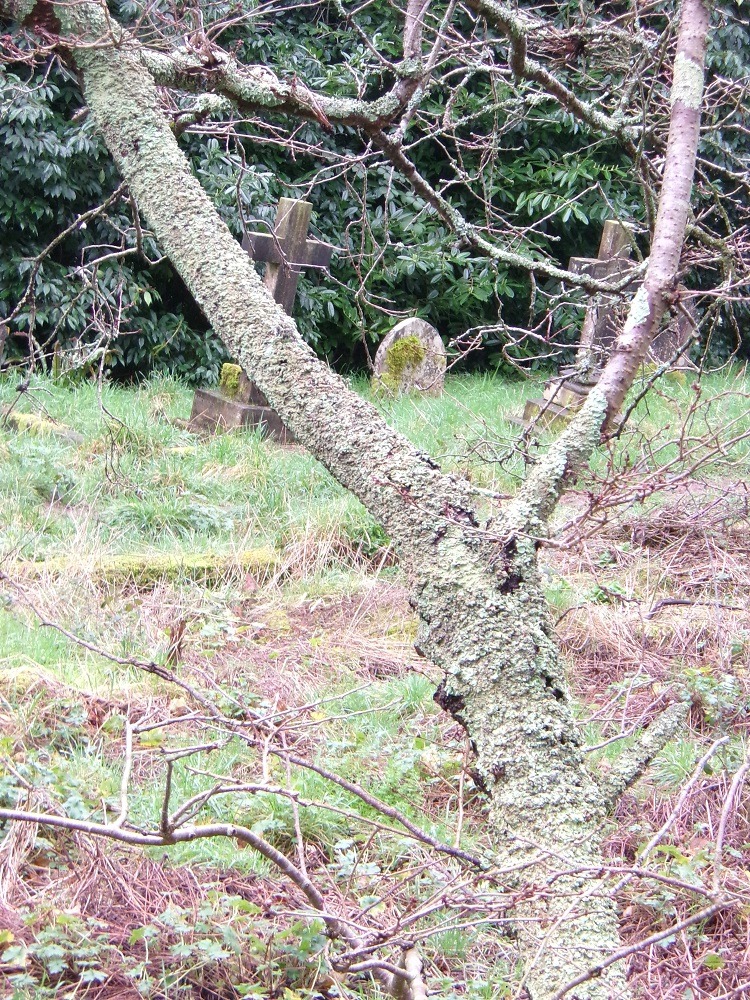
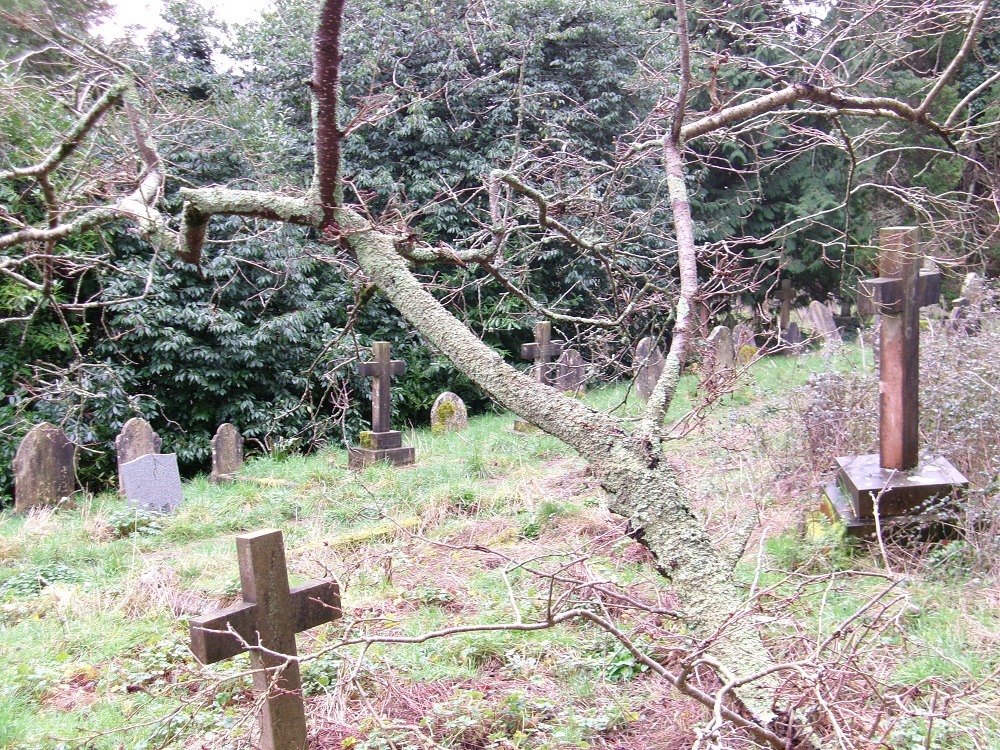
At Sidmouth’s cemetery there’s an especially eye-catching cherry sapling leaning badly beside the elegant flight of steps up to the modern burial area at the top of the hill and, in this chilly season of dull earth tones, its bare branches are fully clothed in a coat of luscious green lichen. Lichen explodes into well-being in the winter when the damp draws them out of their summer desiccation. [See Liz’s photographs below of the leaning cherry.]
…
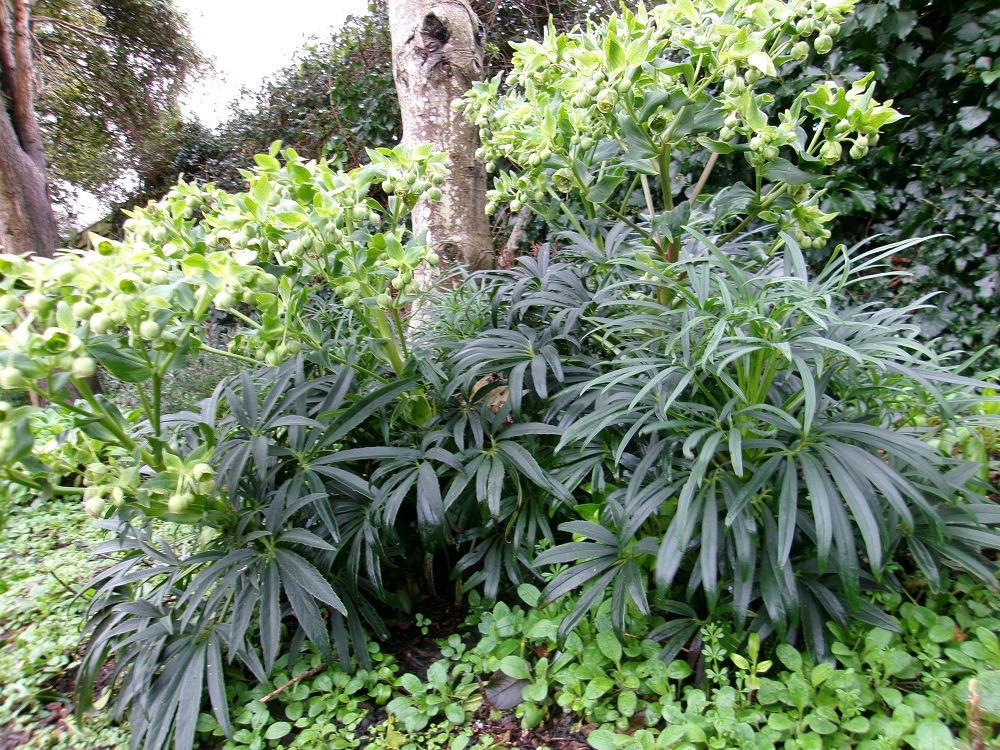
Wild hellebores are also in their glorious green winter flower along the Temple Street driveway and could give someone of a nervous disposition the feeling that the Devil has stood as a model for their outstretched talons. [As captured in Liz’s photo below.]
…
Trees are the crowning glory of the cemetery and have been planted since it opened in 1879. Near the chapel is a Tulip tree, Liriodendron tulipifera. It’s yellow tulips open in June and together with very large fingered-leaves looks very exotic indeed. [And see this posting for a fabulous photo of the Tulip tree taken by Ed Dolphin: Trees in leaf and in flower around the Cemetery – Cherishing Sidmouth Cemeteries]
On the other side of the road is an extraordinary Yellow buckeye tree, a horse chestnut relation, with a marked graft point dividing two very different bark patterns.
Further up the cemetery, beside the modern burial area roadway and neighbour to the tree fern is a Winter’s Bark. Named for Captain Winter who boiled its leaves and bark together to make a source of vitamin C which saved the lives of his crew on the long journey back to England.
When the grass dies down in wild area 3 it’s possible to see bare worn tracks meandering down the hill to the bungalows on its eastern border. These must be the work of the badgers who live up in the Knapp on top of the hill and journey down and into the back gardens for the food the residents put out for them.
But if you want the masters of the universal cemetery this autumn, you’ll find fungi in troops and clumps all over. Mick Street has provided the following account of some of those we have encountered this past year and of the insects and birds there:
There are a lot of different fungi in area 3, the wild area, which holds burials of the late 1800s, these include the bracket fungi Polyporus and Ganoderma which can be seen at the base of beech trees, on the Spanish oak and on the tree stump as you exit area 3 by the steps.
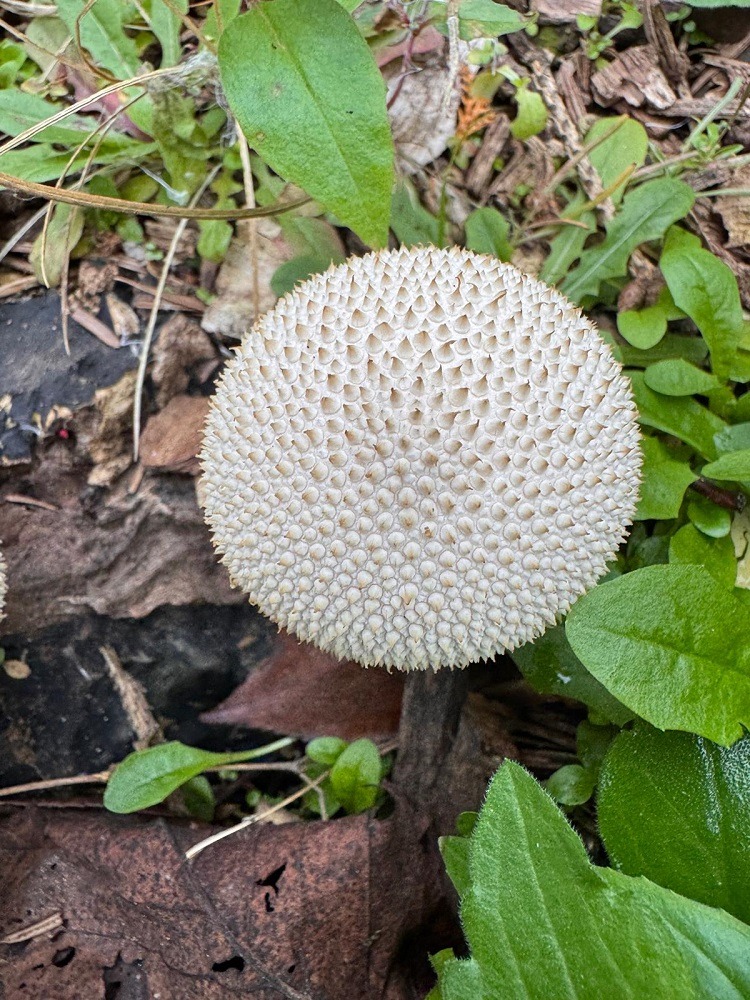
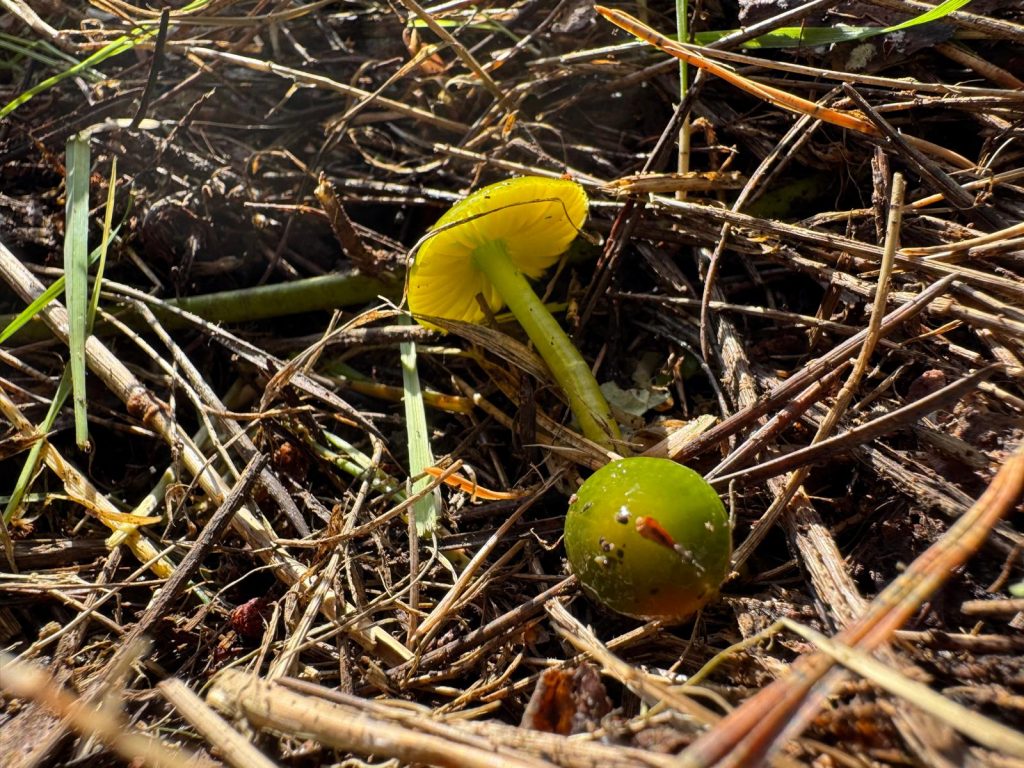
Various Waxcaps are present including the Parrot waxcap. Waxcaps are associated with unimproved and undisturbed grassland. Also, the Common puffball with its domed shape and beautiful reticulated pattern over the surface. As it matures, a hole develops in the centre of the dome and when knocked clouds of spores are puffed out. [And below we have specimens of Common puffball and the Parrot waxcap. As Mick says about his photos, “the Waxcap is the green one”.]
…
On a great many of the dead wood branches we clear up after a storm are Wood ear or Jelly ear which feeds on dead or decaying elder, beech and ash. It likes the damp, shady places in area 3, now called the wild area. Folk lore says that the elder was the tree that Judas Iscariot hanged himself on and so it used to be called Jew`s ear.
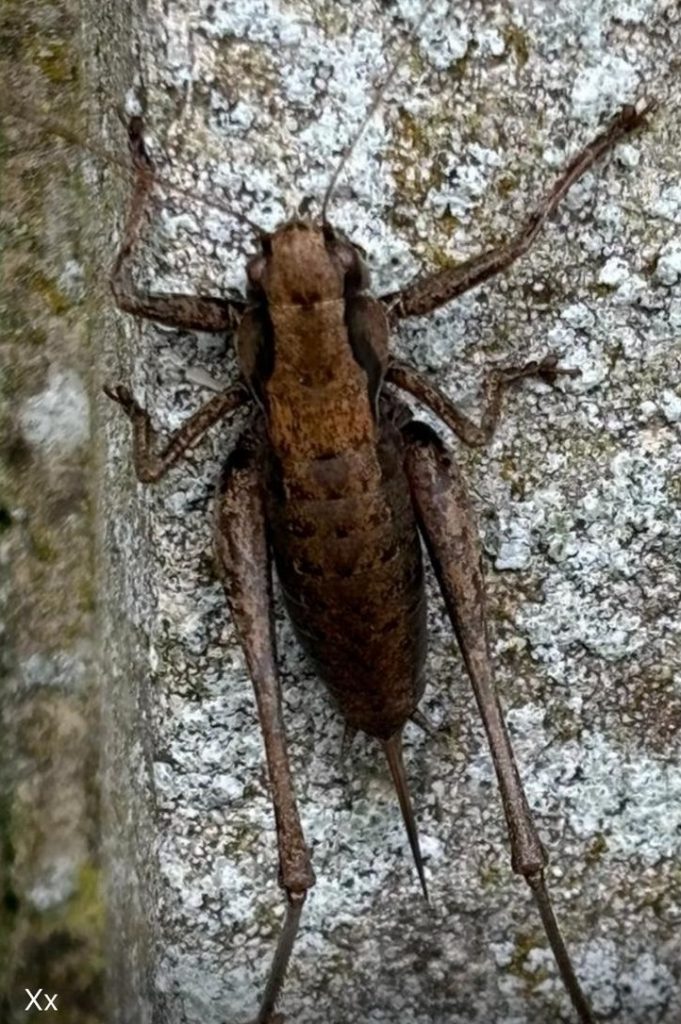
Insects too abound. Two large characteristic insects in area 3 are the Dock shield bug and Dark bush cricket. The adult Dock shield bug overwinters in long grass and lays its eggs in the spring. The developing nymphs feed throughout the summer on the Common sorrel that can be found in area 3. The Dark bush Cricket lays its eggs in autumn in rotting wood or crevices in bark. Both adults and nymphs are omnivorous feeding on small insects and various plants. [See the specimen caught on camera by Mick below.]
…
In the summer we see butterflies belonging to the brown family group, such as the Speckled wood, Meadow brown, Hedge brown and Ringlet on the long grass which is thick enough at the base for them to hide in when not active and as a nursery for them to lay their eggs. Their larvae feed on grass and hibernate as small caterpillars during winter, also at their grassy bases.
The most iconic bird species there is the Green woodpecker, attracted by the nests of the yellow field ant which form mounds over the site especially in areas 1 and 2. It disturbs the ants by probing the mound with its beak and then licks them up with its sticky tongue which is 10 cm long and has to be fitted in to a special cavity at the back of the head.
Its loud squawking call tells you it’s on patrol. They nest every year nearby in the in the Knapp wood at the top of the cemetery hill or at Bulverton and can be seen like green flying bullets over the headstones if you are quick.
7/2/2026 Liz Dicker and Mick Street for VGS.
…